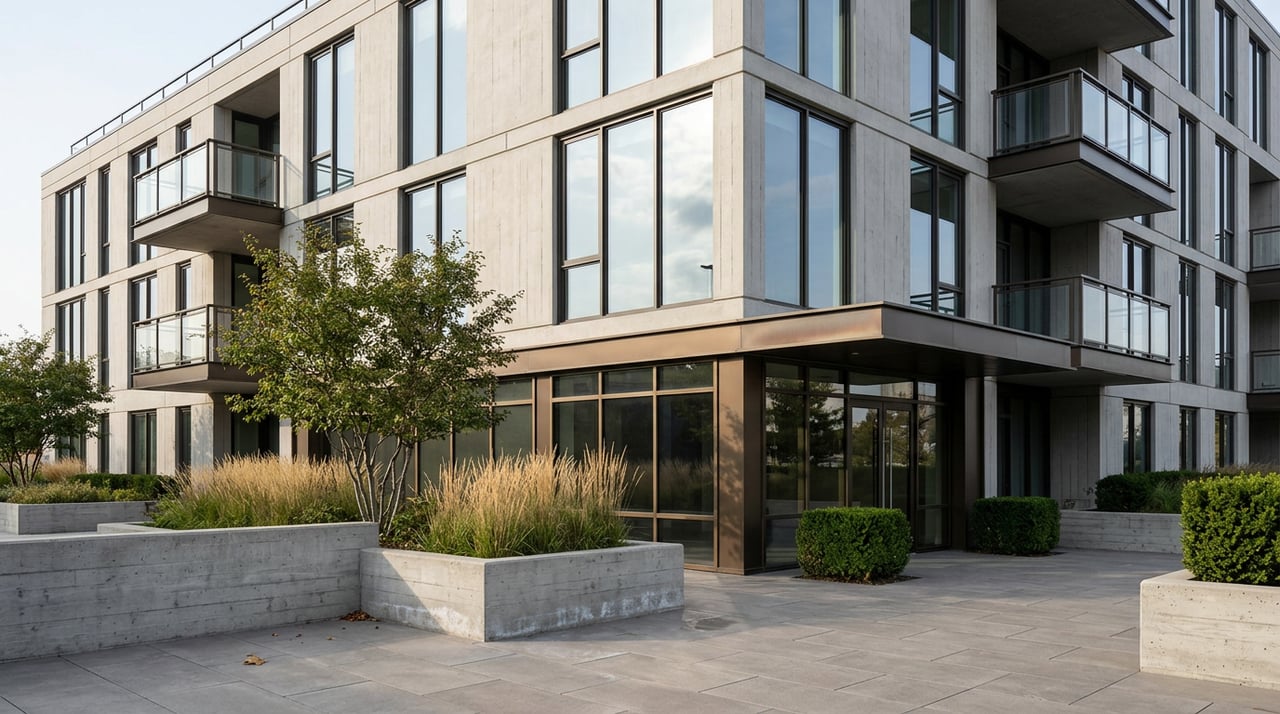
Downtown Denver Condo Market: Beyond the Falling Median
September 3, 2026
September 3, 2026
A downtown Denver condo buyer who ran the numbers in July would have seen a median attached-home price of $380,000, nearly six months of inventory, and a 40-day average stay on the market. Read on its own, that looks like a straightforward buyer's market. Then, on August 3, Fannie Mae retired the Limited Review pathway it had long used to approve condo financing, and every downtown building with more than ten units suddenly needed a Full Review of its HOA budget, reserves, insurance history, and litigation record before a buyer could close.
The price softened. The paperwork got harder. Both things are true, and neither one explains the other unless you understand what put downtown Denver in this position in the first place.
Denver Metro Association of Realtors data for July 2026 shows attached homes, condos and townhomes, closing at a median of $380,000 with inventory stretching toward six months of supply and a median 40 days in the MLS, down slightly year over year. Detached single-family homes told a different story entirely: a median of $660,000, just under three months of inventory, and a median 17 days on market. That gap is the headline. Attached product is soft. Detached product isn't.
But months of inventory and days on market describe how fast homes are selling, not why. To understand why downtown condos specifically behave this way, you have to go back further than July.
Colorado passed its Construction Defect Action Reform Act in 2001, intending to give homeowners a clear path to sue builders over defects. What it produced instead, according to research from the Common Sense Institute, was a market where condominiums fell from roughly a third of all Denver-metro multifamily housing starts between 2002 and 2008 to just 5 percent from 2009 onward, and only 3 percent by 2022. Developers who once built condos for first-time buyers shifted almost entirely to rental apartments, where liability exposure runs lower.
The resale math shows how far that shift went. In 2005, Colorado saw roughly 2.4 resold condos for every new condo sale. By 2022, that ratio had widened to 30 resales for every new sale. Downtown Denver's condo inventory today is overwhelmingly old inventory, because almost nothing new got built to replace it.
Colorado lawmakers finally moved on this in 2025. HB25-1272, signed in May of that year and known as the Colorado American Dream Act, created a voluntary Multifamily Construction Incentive Program that builders can opt into starting January 1, 2026, in exchange for mandatory warranties and third-party inspections during construction. The law also raised the threshold for a homeowners association to file a construction defect lawsuit from a simple majority of owners to 65 percent, effective August 2025, a change meant to reduce the number of lawsuits driven by a small, unrepresentative group of owners.
Supporters hope this loosens the insurance and litigation pressure that's kept condo development frozen. It's a voluntary program that only started this year, and builders who've been burned before are watching to see whether it actually moves insurance premiums before they commit to another project.
Downtown Denver already has its test case: Upton Residences, a two-tower, 461-unit condo project rising at 18th Street and Glenarm Place. It's the largest condominium development in Denver since The Spire delivered 496 units in 2009, with pricing that started in the low $400s and units as small as 530 square feet reaching up to nearly 1,900. Construction began in spring 2022, ahead of the reform that was supposed to make projects like it easier to build.
It hasn't been a clean run. In August 2025, general contractor Amacon sued its concrete subcontractor, alleging the subcontractor had walked off the job and removed structural bracing from an upper floor, prompting a Denver district court judge to issue a temporary restraining order. Denver District Judge Bruce Jones acknowledged the stakes directly at an August 19 hearing, noting that a temporary restraining order gets serious consideration "when somebody is saying that a building's going to fall down." Independent structural engineers subsequently confirmed the towers were safe, and construction continued toward its 2026 delivery.
Upton is the proof that new downtown condo supply can get built again. It's also proof that building it is still complicated, contentious, and slower than anyone hoped, even with the legal reform behind it.
The $380,000 median doesn't describe one market. It's an average across at least three markets that don't move together.
New construction like Upton competes on price and warranty against buildings that are twenty or thirty years old. Aging resale stock in LoDo and around Union Station makes up most of what's actually for sale downtown, and it's this segment dragging the median down and the days-on-market number up. Meanwhile, the ultra-luxury tier operates on entirely different rules. The Denver Gazette reported in May 2026 that Cherry Creek North had roughly a dozen available condos outside remaining Waldorf Astoria Residences inventory, with one penthouse at 100 Detroit Street listed at $16 million for 7,145 square feet. The Waldorf Astoria Residences project itself was already 70 percent sold as construction got underway. Near Larimer Square, the Four Seasons Private Residences had about a dozen luxury resales on the market, a small enough number that a single closing can move the comparables for the whole building.
The same reporting noted a real shift in buyer psychology since 2020: some buyers who wanted to be in the heart of downtown grew wary of urban-core safety perceptions and moved to the suburbs instead, which has made outlying condo markets a comparatively steadier bet. That preference shift is part of why downtown's softness hasn't spread evenly to Cherry Creek or the suburbs at all.
At the very top of the market, scarcity still wins. Among January 2026's highest-priced closings, a penthouse unit at 1500 Wynkoop Street sold for $8.25 million in cash after 106 days on the market, a reminder that even a soft attached-home median coexists with genuine competition for the right unit in the right building.
This is where the August 3 Fannie Mae change matters most. Retiring the Limited Review pathway means most downtown condo buildings with more than ten units now require a Full Review before a conventional loan can close. That review examines the HOA's budget, its reserve funding, its insurance coverage, and its litigation history, including any pending construction defect claims. Fannie Mae's current standard requires at least 10 percent of annual assessment income to go toward replacement reserves, a figure set to rise to 15 percent for applications beginning January 4, 2027. Separately, a rule capping any single entity's ownership at 20 percent of units in a project of 21 or more units remains in place even after an older 50 percent concentration cap for established projects was retired in March 2026.
Practically, that means the HOA documents you'd normally request after an accepted offer now belong earlier in the process, before you write one. If you're comparing a downtown condo to a home in Highlands Ranch or Centennial, the diligence isn't apples to apples. A single-family purchase in the suburbs doesn't carry an HOA reserve study or a financing review tied to the building's litigation history. A downtown condo purchase does, and skipping that step can cost you weeks after you thought you had a deal.
Does a falling median mean prices are actually dropping across every downtown building? No. The median reflects a market weighted heavily toward older resale inventory. New construction and the ultra-luxury tier are behaving differently, in some cases moving in the opposite direction.
If I'm buying a resale unit, not new construction, do the 2025-26 legal reforms even apply to me? The Multifamily Construction Incentive Program only affects builders who opt in going forward. For an existing building, what matters more is its reserve funding and litigation history, which is exactly what a lender's Full Review will now examine.
What should I ask for before making an offer downtown? Request the HOA's current reserve study, its most recent budget, insurance declarations, and a summary of any pending or settled construction defect claims. Getting these before you write an offer, rather than after, keeps a Full Review from becoming a surprise.
Downtown Denver's condo market is genuinely more negotiable than it was two years ago, but the leverage has shifted from price alone into paperwork, timing, and building selection. Working through which building, which financing path, and which comparison point actually fits your situation is where a second set of eyes pays for itself.
If you're weighing a downtown condo against a home in Greenwood Village, Cherry Hills Village, or one of Denver's southern suburbs, Whitney Cain can walk through the specific numbers for your situation, including how financing on a particular building might affect your timeline. Let's Connect.
Stay up to date on the latest real estate trends.
Etiam non quam lacus suspendisse faucibus interdum. Orci ac auctor augue mauris augue neque. Bibendum at varius vel pharetra. Viverra orci sagittis eu volutpat.