Buying A Luxury Home In Cherry Hills Village: What To Know
June 11, 2026
June 11, 2026
Wondering what really sets a luxury home purchase in Cherry Hills Village apart from other high-end Denver-area markets? The answer is not just price. When you buy here, you are often buying acreage, privacy, long-term land-use stability, and a distinct semi-rural setting that is hard to replicate elsewhere in the metro area. If you are considering a move into this market, it helps to understand how values, zoning, lifestyle, and due diligence all work together. Let’s dive in.
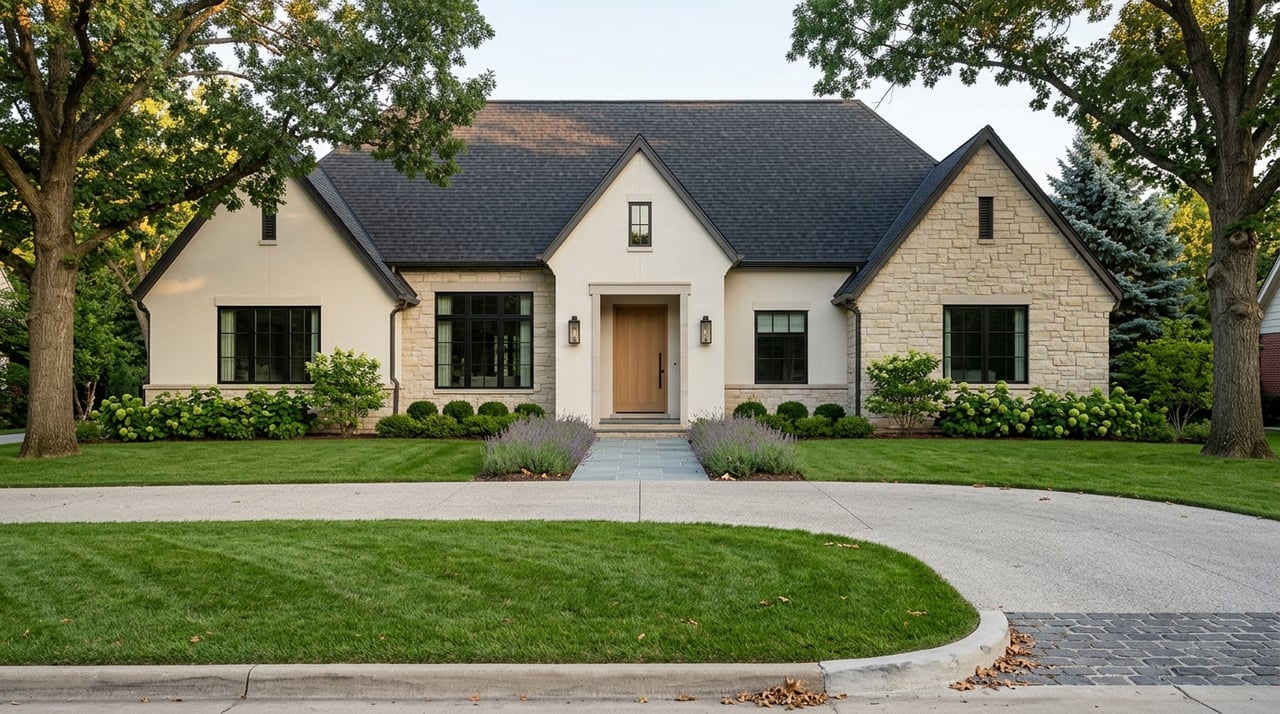
Cherry Hills Village is a predominantly residential home-rule city in Arapahoe County just south of Denver. Its master plan centers on preserving a safe, low-density residential community with a semi-rural, open character and a future land-use pattern that remains single-family residential.
That matters because your purchase here is often about more than the house itself. In many cases, the value is tied just as much to the surrounding land, the spacing between homes, and the city’s long-term planning philosophy as it is to the finishes inside the home.
Cherry Hills Village sits firmly in Colorado’s ultra-premium housing tier, but market numbers can shift noticeably from month to month. In April 2026, Realtor.com reported a median listing price of $4,222,500, a median sold price of $4,000,000, 50 active listings, 41 median days on market, a 94% sale-to-list ratio, and $580 per square foot.
Redfin’s April 2026 snapshot showed a median sale price of $3,650,615, 30 median days on market, and the same $580 per square foot. Its March 2026 data showed a $5.0 million median sale price and 56 days on market, which highlights how quickly medians can move in a small, high-end market.
The key takeaway is simple: this is a low-volume market where a handful of luxury closings can change the headlines fast. Instead of focusing only on one citywide median, it is smarter to look at how a specific property compares by lot, location, condition, and overall fit.
In Cherry Hills Village, days on market should not automatically be viewed as a warning sign. In a market with fewer transactions and highly individual properties, marketing time often reflects selectivity and pricing strategy more than weakness.
Well-positioned homes still attract buyers, but the process tends to be more property-specific than in a traditional suburban resale market. You should expect thoughtful pricing, careful comparisons, and room for negotiation depending on the home’s lot, updates, and setting.
Cherry Hills Village functions less like one uniform neighborhood and more like a collection of distinct enclaves. Realtor.com identifies areas such as Old Cherry Hills, The Buell Mansion, Cherry Hills North, Cherry Hills Farm, Cherry Hills East, Cherry Hills Park, Cherryridge, Glenmoor of Cherry Hills, Southmoor Vista, and Charlou Park.
For you as a buyer, that means citywide averages only tell part of the story. A home’s exact location, lot character, neighborhood identity, and access to nearby amenities can all shape value in a major way.
One of the biggest differences in Cherry Hills Village is lot size. The city’s master plan defines rural-density residential land as single-family parcels of 2.5 acres and larger, low-density residential land as one acre and larger, and medium-density residential land as single-family parcels of 16,000 square feet and larger.
Current permit guidance also shows minimum lot areas that range from 2.5 acres in R-1 to 1.25 acres in R-2, 1 acre in R-3, and 16,000 square feet in R-5. Setbacks and lot coverage limits vary by district, which can directly affect how a property lives today and what changes may be possible later.
This zoning framework gives Cherry Hills Village a very different feel from more conventional south Denver suburbs. Large lots, visual separation, and a pastoral streetscape are not accidental features here. They are built into how the city plans and regulates growth.
In many luxury markets, buyers focus first on square footage and interior design. In Cherry Hills Village, site quality can be just as important as the home itself.
The city’s planning goals emphasize preserving view corridors, respecting surrounding properties, and maintaining an open, semi-rural character. That means privacy, lot shape, mature landscaping, and the way a home fits on its parcel can play an outsized role in long-term desirability.
If you are comparing homes, look beyond the kitchen and primary suite. Pay attention to usable outdoor space, how close neighboring structures feel, and whether the site offers flexibility for the lifestyle you want.
If you are considering a remodel, addition, or eventual rebuild, lot analysis becomes especially important. The city’s permit materials show that site plans are survey-based, setbacks must be measured from lot lines, and many residential projects must show compliance with bulk-plane and floor-area-ratio rules.
That can affect future plans for a pool house, expanded footprint, or other improvements. Before you commit, it is worth understanding the buildable envelope, grade, tree preservation factors, and how much of the allowable site area may already be used by the existing home.
In a market where land carries so much value, renovation potential is not something to assume. It is something to verify early.
Cherry Hills Village also stands out for its club-oriented lifestyle. The city’s master plan identifies private clubs as important recreational and social anchors, including Cherry Hills Country Club, Glenmoor Country Club, The Village Club, and Arapahoe Tennis Center.
For many buyers, this club network is part of what makes the area feel distinctive and established. It contributes to the enclave-like appeal that sets Cherry Hills Village apart from a typical suburban address.
Cherry Hills Country Club is one of the area’s signature institutions. According to the club, it was founded in 1922 on 272 acres and has been known for championship golf since 1938.
The club has hosted 14 national championships, including the 2023 U.S. Amateur. Its facilities and guest rules also reflect a broad lifestyle offering that includes golf, tennis, pool, dining, fitness, and a notably formal club atmosphere.
Glenmoor Country Club is another major lifestyle anchor in the village. The club describes itself as a family-oriented golf and social club with an 18-hole course, three outdoor tennis courts that also convert to pickleball, two pools, a fitness gym, kids’ activity space, an outdoor playground, and year-round dining and social programming.
If club access is part of your purchase criteria, it is smart to evaluate nearby options early as you narrow neighborhoods. In Cherry Hills Village, lifestyle fit often matters just as much as architecture.
While private clubs are a major draw, public outdoor amenities also add to day-to-day quality of life. The city highlights John Meade Park, the High Line Canal, Dahlia Hollow Park, Blackmer Common, and a wildlife-spotting map feature.
Quincy Farm is especially notable. It is a 17.5-acre historic property in the heart of the village, listed on the National Register of Historic Places and open daily for visitation on both sides of the High Line Canal trail.
John Meade Park and Alan Hutto Memorial Commons were redeveloped in 2019 and 2020 with fishing piers, a boardwalk, a play area, and an amphitheater. These amenities are smaller in scale than the private clubs, but they still add meaningful outdoor access and character.
In a market at this price point, details that might seem minor elsewhere can have major financial implications. Cherry Hills Village buyers should pay close attention to zoning, district boundaries, utilities, and long-term property use.
The city prohibits short-term rental of single-family residences for periods of less than 90 consecutive days. If you were imagining a hospitality-style use or flexible short-stay income strategy, that is a key rule to know up front.
For many buyers, this market is better suited to owner-occupancy or long-term holding than short-term rental plans. That aligns with the city’s broader focus on maintaining a stable single-family residential environment.
The city’s zoning and district maps are informational only and should not be relied on to determine official zoning or special-district jurisdiction. Buyers are directed to separate sewer and water district maps, and the city notes that the Cherry Hills Village Sanitation District is a separate entity that should be contacted for sewer and tap information if a parcel lies within the district.
This is the kind of issue that can affect planning, costs, and timelines. It is worth checking early, especially if you are buying with future improvements in mind.
Cherry Hills Village also maintains general improvement districts in at least two smaller pockets: Charlou Park 3rd Filing and Southmoor Circle and Hudson Parkway. These will not affect every home, but if they do apply to a property you are considering, they can influence governance, assessments, and carrying costs.
In a luxury purchase, that is not a detail to leave until the last minute. Early verification helps you make a cleaner, more confident decision.
One reason many luxury buyers are drawn to Cherry Hills Village is long-term land-use consistency. The city’s state land-use page says the village opposes mandates that would allow accessory dwelling units by right, lots below city minimum standards, or residences other than single-family homes.
Its master plan reinforces the goal of preserving low-density, semi-rural character. For buyers who value predictability in the surrounding built environment, that stability can be a meaningful part of the property’s appeal.
If you are evaluating homes in Cherry Hills Village, these are some of the most important value drivers to keep front and center:
When you view the market through that lens, Cherry Hills Village makes a lot more sense. It is not just a luxury home market. It is a land-and-lifestyle market with a strong emphasis on privacy, permanence, and property-specific value.
If you want a high-touch buying experience in one of Denver’s most established luxury enclaves, working with local guidance can make the process far more efficient and informed. To talk through neighborhoods, lot considerations, and current opportunities in Cherry Hills Village, connect with Whitney Cain.
Stay up to date on the latest real estate trends.
Etiam non quam lacus suspendisse faucibus interdum. Orci ac auctor augue mauris augue neque. Bibendum at varius vel pharetra. Viverra orci sagittis eu volutpat.